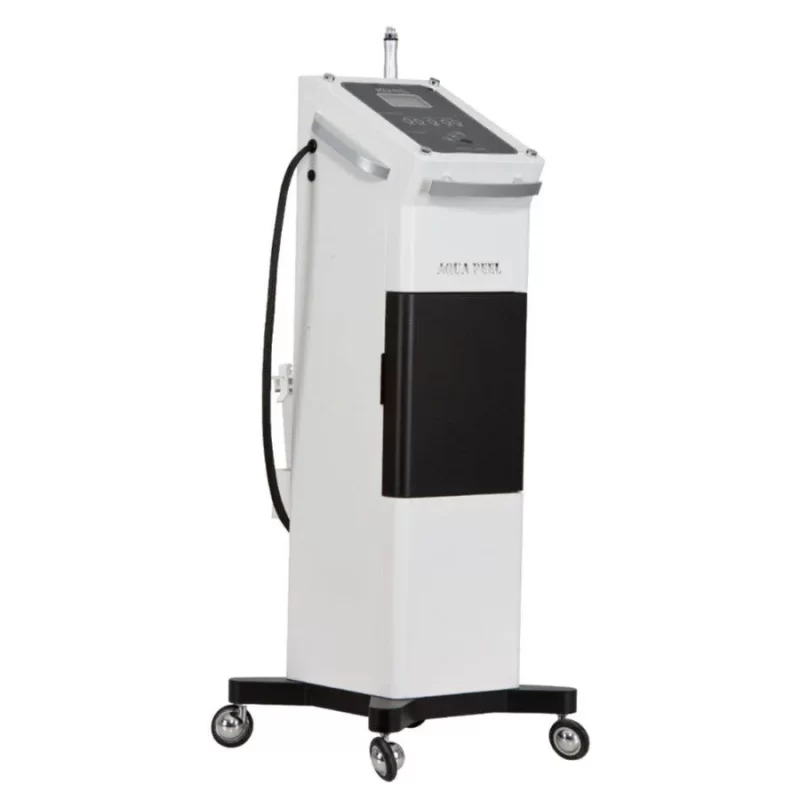
Aqua Peel can be a pore-cleansing care option for certain skin types, but it cannot promise permanent blackhead removal in a single session, nor can it “close” pores. The small dots on the nose may be blackheads, or they could simply be normal sebaceous filaments. First confirming what they are before discussing whether cleansing is needed and how to maintain results can help prevent over-treating due to excessive concern.
What does an Aqua Peel treatment typically involve?
This type of care focuses on steps such as cleansing solutions, keratin management, and suction-based cleaning. According to the B:AID official website, Aqua Peel includes AHA and BHA-related steps followed by hydrating aftercare. The actual solutions used, treatment intensity, and steps should be determined based on the skin condition at the time of the session.
In Chinese, terms like “small bubble” or “water dermabrasion” are sometimes used broadly, but they do not necessarily refer to the same brand, device, or procedure. When booking, it is more helpful to ask for details about the actual treatment rather than only comparing vague names.
What is the difference between blackheads, sebaceous filaments, and inflamed pimples?
| Appearance Category | Key Points for Understanding and Management |
|---|---|
| Blackheads | A type of open comedone. The dark appearance at the pore opening is caused by blockages inside the pore, not just external dirt. |
| Sebaceous filaments | Normal structures involved in sebum excretion. They appear as fine, uniform dots on the nose and do not need to be completely removed. |
| Red, swollen, painful pimples | May involve inflammation. Suction-based cleansing alone cannot replace acne assessment and treatment. |
| Permanently visible pores | Related to factors such as sebum, hair follicles, and skin structure. Cleansing cannot address all causes. |
When appearances look similar, do not repeatedly squeeze with needles or fingers to verify. This is especially important if the same area is already red, broken, or painful — continuing to try to “squeeze it clean” is more likely to increase irritation.
They come back shortly after cleansing — is that because the treatment wasn’t done properly?
Not necessarily. Sebum is continuously secreted, and sebaceous filaments are normal structures; cleansing will not stop these physiological processes. When blackheads keep coming back, you should also look at the causes of comedone formation and daily treatment plans, rather than just increasing the number of treatments.
To decide whether it is worth continuing, you can compare roughness, the number of comedones, irritation reactions, and daily maintainability over a period of time. The glow right after treatment, temporary changes after cold compresses, or the color of the collection bottle alone cannot represent long-term improvement.
How often should it be done? Can it be done every week?
There is no fixed frequency that works for everyone. It needs to be arranged based on current skin tolerance, the solutions used, treatment intensity, and whether you have recently done chemical peels, used retinoid products, or received other treatments. More frequent sessions do not mean fewer blackheads.
If you already have flaking, burning, or stinging when washing your face, irritation and inflammation should be assessed first, and cleansing may need to be postponed. Before combining strong exfoliation, repeated suction, and other irritating treatments on the same day, you should also let your doctor know your full plan.
What is the focus of long-term pore management?
Maintain gentle cleansing; do not repeatedly scrub or use nose strips frequently just to remove oil.
Choose tolerable moisturizers and sunscreens based on your skin type to keep your daily skincare routine stable.
When comedones persist, ask whether standardized acne treatment is needed instead of just increasing cleansing.
Keep a record of recently used acid products, retinoids, and anti-acne products, and mention them during your consultation.
After cleansing, continue to care for your skin according to actual skincare requirements. Do not immediately add scrubs, peel-off masks, or at-home blackhead suction devices just because your skin feels temporarily smooth. If redness, pain, or breakage持续 worsens, contact a professional for evaluation promptly.
Frequently Asked Questions
Are blackheads caused by not washing your face properly?
Not exactly. Blackheads are a type of comedone issue; simply washing your face more often or scrubbing harder won't solve the problem.
Do sebaceous filaments need to be fully extracted on a regular basis?
No, they don't. Sebaceous filaments are a normal skin structure. The management goal is to reduce their visibility, not to completely eliminate all tiny dotted texture on the nose.
Can pores be permanently shrunk after a hydradermabrasion (small bubble) treatment?
Such a promise cannot be made. The visible change in appearance right after cleansing is not the same as a long-term improvement in pore structure.
My nose is oily but my cheeks are dry—can the same intensity be used for my entire face?
It's not advisable to decide on a full-face treatment based only on oiliness in the nasal area. Different areas may have different needs, and specific steps should be adjusted according to your skin condition.
When consulting about Aqua Peel at B:AID, shifting your focus from "how much stuff can be extracted" to "whether this is suitable for my current skin and how to maintain results after cleansing" will make it easier to create a sustainable care plan.