Laser tattoo removal usually requires multiple sessions, and it is impossible to guarantee how many sessions it will take to clear the tattoo based solely on its size or a single photo. The result is affected by many factors: color, ink composition, implantation depth, whether the tattoo has been repeatedly covered, and the original condition of the skin. Even after multiple treatments, some tattoos may still retain color or leave outline marks.
First, clarify your goal: complete removal, or fading to make room for a new design?
Restoring skin to a state close to its original tone is one goal, while lightening the ink to prepare for a cover-up tattoo is another. For the first goal, residual color and changes in skin tone need to be discussed more carefully. For the second, you should also let your doctor know your plan, to avoid rushing into a new tattoo before the skin has fully recovered.
During the consultation, you can provide information such as roughly how old the tattoo is, whether it has been touched up or covered by another tattoo, how many removal sessions you have had before, and whether there is any raised tissue, itching, or scarring. Instead of only asking how much a single session costs, it is better to first clarify what result you want to achieve this time.
Why can't different colors be treated with the same plan?
Lasers fade tattoos by leveraging the way ink particles absorb light energy. Different colors and ink compositions have different absorption characteristics, so doctors need to select the appropriate device and wavelength. Tattoos with mixed colors or multiple cover-up layers usually require a more complex assessment.
| Tattoo type | Factors that affect the treatment plan |
|---|---|
| Dark single-color tattoos | Ink density, depth, body location, and previous treatments still need to be considered; the number of sessions cannot be judged by color alone. |
| Multi-color or cover-up tattoos | Different colors may require different treatments, and some colors may respond differently from others. |
| Flesh-toned, white, or other light-colored inks | Be aware of the risk of poor response or post-treatment darkening of the ink. |
| Permanent makeup such as eyebrow and eyeliner tattoos | These have special ink types, touch-up histories, and locations; treatment around the eyes also requires professional eye protection. |
Is picosecond laser definitely faster than Q-switched laser for tattoo removal?
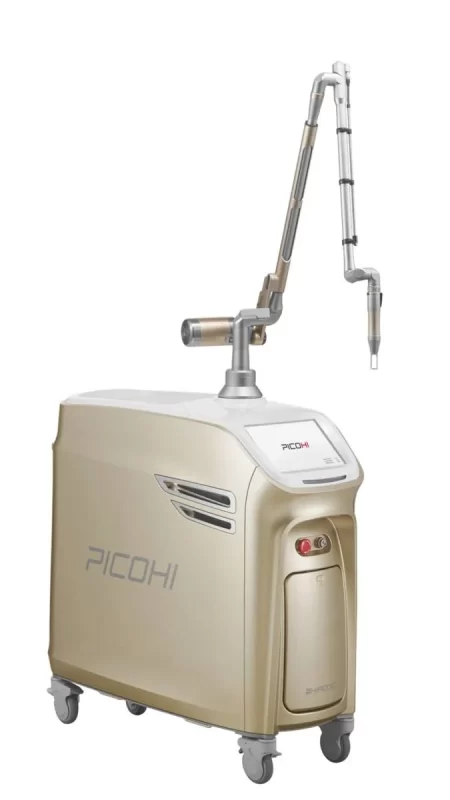
'Picosecond' and 'Q-switched' describe technical features of the devices, and the name alone cannot guarantee faster clearance for any individual. The actual choice also depends on wavelength, ink characteristics, skin tone, and how the doctor balances the fading goal with skin reactions.
The same device can be used for different treatments, but hair removal, spot removal, and tattoo removal use different modes. Do not assume that just because a clinic has a certain device, it is definitely suitable for your tattoo color or body location.
Why do eyebrow and eyeliner tattoos require a separate assessment?
Permanent makeup may use mixed inks, and subsequent touch-ups can change their composition. Some inks may actually darken after laser treatment, so the doctor may need to perform a small test area first and explain how any color changes will be managed.
Treatment around the eyes cannot rely on simply closing the eyes as a substitute for professional protection. Whether to proceed with treatment, what protection to use, and which areas can be treated should all be decided by a doctor with relevant experience. Do not try to remove permanent makeup yourself with eyebrow removal solutions or strong exfoliating products.
How long should I wait between sessions? How should I plan my recovery period?
The interval between sessions must allow time for the skin to repair and for color changes to appear, so it usually cannot be completed on consecutive days during a short trip. Whether to have another session should be based on a check of the skin's recovery and remaining ink from the previous session, not just on a pre-paid number of sessions.
Follow your doctor's instructions for cleaning and dressing the area; do not pick at scabs or pop blisters.
Confirm when you can resume swimming, exercise, or activities that may rub the treated area.
During recovery, use appropriate covering and sun protection suitable for your skin's current condition.
Keep photos taken under the same lighting conditions. If redness, swelling, pain, discharge, or fever continues to worsen, seek medical attention promptly.
Possible issues include hyperpigmentation, hypopigmentation, infection, or scarring. Scars caused by the original tattoo will not automatically disappear as the ink fades, so this needs to be clearly distinguished before treatment.
Frequently asked questions
Can a small tattoo be removed completely in a single session?
A small area does not mean the ink is shallow or easy to remove; assessment of color, density, and skin reaction is still required.
If the tattoo turns white immediately after treatment, does that mean the ink has been fully cleared?
You cannot draw a conclusion based on that. The immediate visible change is different from the actual fading that happens later; an evaluation must be done after recovery.
I had my tattoo treated elsewhere before. Can I switch to a different clinic to continue?
You can consult first, but you should provide records of the original equipment used, number of sessions, dates, and any adverse reactions so the new treating doctor can reassess your case.
My tattoo area is always itchy or raised. Can I still get it removed directly?
You should first determine if there are issues such as inflammation, an allergic reaction, or scarring; it cannot automatically be treated as a regular tattoo.
The B:AID official website lists tattoo removal and devices such as PicoHi and StarWalker. When booking, it is recommended to provide information about your tattoo ink and previous treatment history. The specific suitable device, treatment area, and course of treatment need to be confirmed through an in-person consultation.