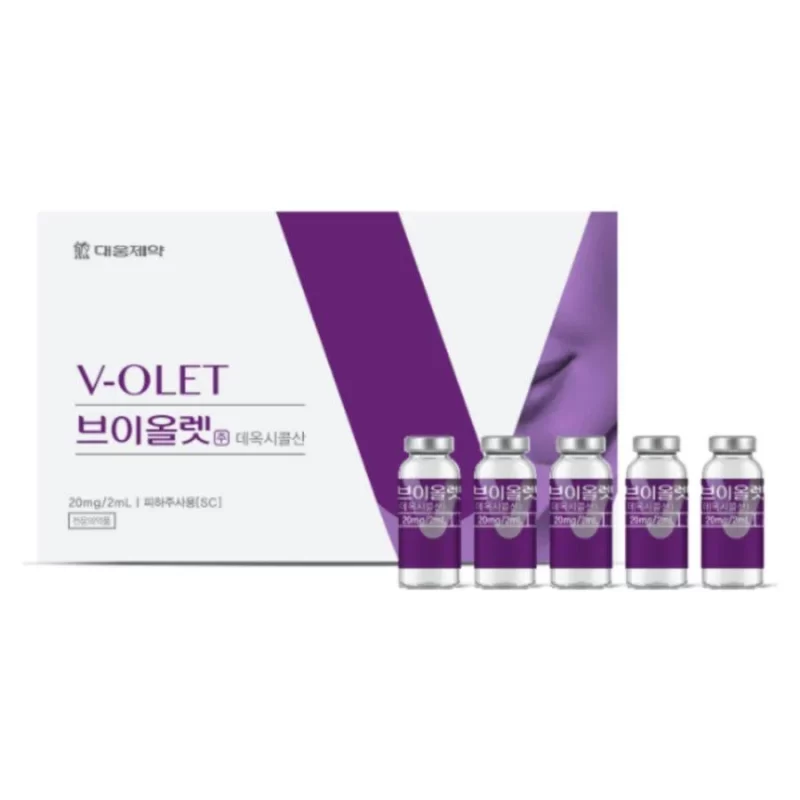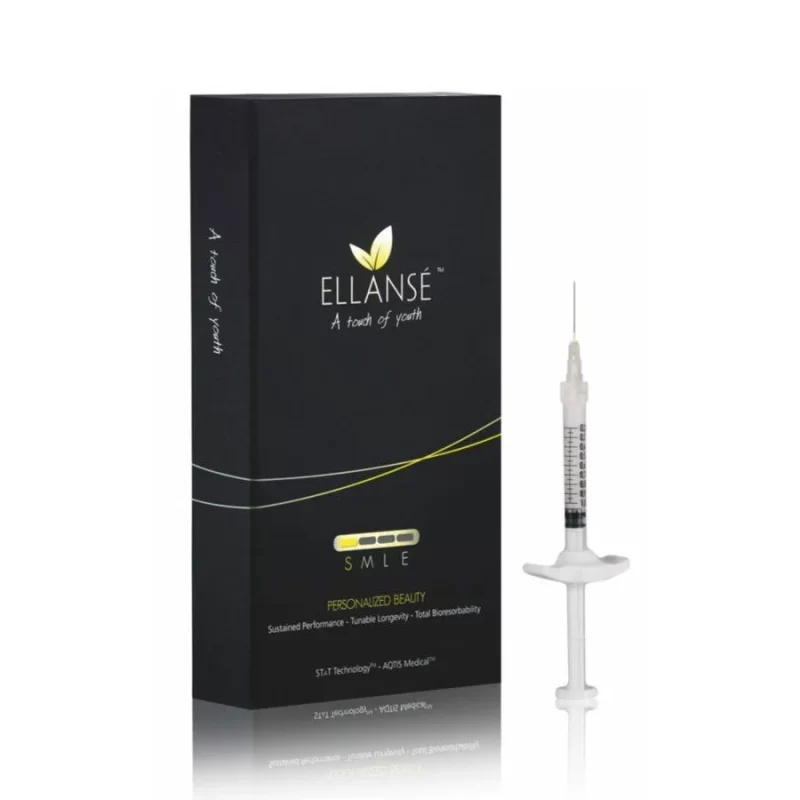
Ellansé (often called the “youth injection”) and Juvelook belong to different injectable material systems. Ellansé contains polycaprolactone (PCL) microspheres in a gel carrier; Juvelook-related products are characterized by a combination of poly-D,L-lactic acid (PDLLA) and hyaluronic acid (HA). Even though both trigger a collagen response, they cannot be directly interchanged using the same product type or dosage.
What do PCL, PDLLA and HA stand for?
PCL and PDLLA are different types of polymers, while HA refers to hyaluronic acid. They differ in function, form and formulation within products. Just because a material can be gradually degraded does not mean all post-injection changes can be easily reversed at any time.
Ellansé’s gel carrier provides early correction, while the collagen response associated with PCL microspheres develops gradually. With Juvelook, it is also necessary to distinguish between specific versions and treatment goals — not all treatments under this brand name should be treated as standard hyaluronic acid skin boosters.
| Key points of comparison | Ellansé | Juvelook-related products |
|---|---|---|
| Material understanding | PCL microspheres in a gel carrier. | Composed of PDLLA and HA; the specific version must be verified. |
| Consultation goals | Describe the specific volume, contour or other concerns you wish to address. | Clarify whether your concerns relate to skin texture, scarring, or volume enhancement. |
| Version verification | Confirm the full product name and its local approval status. | Distinguish between actual versions and protocols such as Skin, Volume, etc. |
| Follow-up adjustments | PCL cannot be simply dissolved with hyaluronidase. | The PDLLA component should not be treated as HA that can be directly dissolved with enzymes. |
Is the “youth injection” only suitable for young people?
“Youth injection” is a marketing term, not a medical age category. Suitability should be judged based on an adult individual’s actual goals, tissue condition, product indications and risks — one should not assume younger people need it more just because of the name.
Likewise, “wanting younger-looking skin” is not a sufficiently specific treatment goal. You can further describe concerns such as hollowing in a certain area, unclear contours, rough texture or other issues, so that your doctor can explain which concerns the material can address.
Why should skin texture and volume goals be discussed separately?
Surface skin texture and tissue volume are concerns at different levels. Even if a type of material is used for multiple purposes, the specific version, treatment plan and evaluation metrics may differ. You should not assume you need the same contour injection just because someone else noticed their skin became smoother after treatment.
For Juvelook, it is especially important to confirm the exact version rather than relying only on the general brand name. For Ellansé, you should also confirm the product’s suitability for the target area, instead of treating all collagen-related procedures as a one-size-fits-all choice.
How should changes right after treatment and after several months be understood?
Early appearance may be affected by the carrier, post-injection swelling and local tissue status — it cannot all be attributed to new collagen formation. Subsequent changes should be observed at appropriate follow-up points, and comparisons should ideally be made under consistent lighting and angles.
Duration of results is not determined by the material name alone. The specific product, target area, treatment plan and individual differences all affect outcomes. Advertised duration should not be taken as a personal guarantee.
Since results cannot be simply dissolved, what should be confirmed in advance?
Whether you truly want this type of appearance change, rather than just following a temporary trend.
Whether you have had unknown substances injected in the same area before, or experienced recurrent swelling or hard lumps.
In the event of nodules, asymmetry or other issues, who will be responsible for assessment and follow-up.
Whether you have enough time for observation, and will not rush to add treatment areas just because your return trip is approaching.
This type of injection also carries risks of infection, nodules and vascular-related complications. If you have hard lumps or persistent swelling, contact your doctor and do not massage, squeeze or use over-the-counter products to treat them on your own. Seek immediate medical attention for severe pain, noticeable skin discoloration or vision changes.
FAQ
Which one is definitively better: Ellansé or Juvelook?
There is no universal answer independent of your treatment goals and the specific product. First clarify which aspect you want to improve, then discuss the available material options.
Since Juvelook contains HA, can the entire product be treated with dissolving enzymes?
That is not correct. HA and PDLLA are different ingredients, so the entire product cannot be treated as ordinary hyaluronic acid.
Does more treatment definitely mean more collagen growth?
This cannot be assumed as a linear relationship. Adding more material may increase the burden of adverse reactions, and the treatment plan should be designed by a doctor.
Can it be combined with previous fillers?
It is necessary to first verify the previous filler material, timing, injection sites and current condition, with further examination if needed.
B: The AID official website lists procedures related to Ellansé and Juvelook. During consultation, you can first clearly state your skin texture or volume goals, then ask the doctor to explain the actual product version, expected changes and post-treatment management.