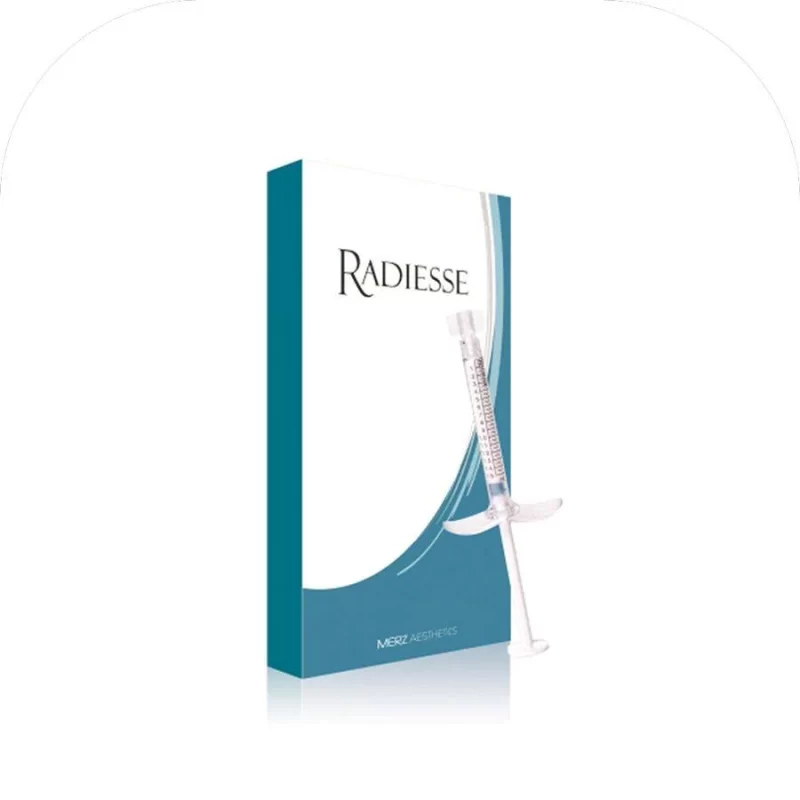
Radiesse is an injectable material containing calcium hydroxylapatite microspheres, abbreviated as CaHA; hyaluronic acid (HA) fillers use hyaluronic acid as their main component. The two differ in composition, tissue response, and post-treatment adjustment options, and cannot be substituted for one another based solely on price per milliliter.
What is CaHA, and how does it differ from hyaluronic acid filler?
Radiesse is composed of CaHA microspheres suspended in a gel carrier. Its effects come from initial correction provided by the material itself, followed by gradual tissue response over time. Hyaluronic acid fillers come in a variety of gel formulations and product types, so they must be evaluated on a product-specific basis.
“Collagen stimulation” does not mean collagen is injected directly, nor does it guarantee the same amount of collagen production for everyone. A material’s name only explains part of its proposed mechanism; the final treatment plan must still take into account the injection site, tissue condition, and specific product instructions.
| Comparison | Radiesse | Hyaluronic acid filler |
|---|---|---|
| Main component | CaHA microspheres and gel carrier. | Hyaluronic acid as the main component, with specific formulations varying by product. |
| Selection criteria | Clear treatment goals, usage conditions, material properties, and post-treatment management. | Clear treatment goals, specific product type, gel properties, and usage conditions. |
| Adjustment options | Cannot be simply reversed using the enzyme-dissolution approach for standard hyaluronic acid fillers. | In some cases, a physician may assess whether treatments such as hyaluronidase are appropriate, but this is not without risk. |
If I want structural support, should I choose Radiesse?
You should not choose a filler based solely on the idea of “support.” Changes to facial contours depend on the underlying bone structure, soft tissue volume, skin laxity, and facial expressions; whether a material is suitable also depends on the target area and your existing anatomy. Significant laxity may not be resolved simply by adding more injectable material.
During your consultation, describe the specific contour changes you would like to address, and ask your doctor to explain which areas can be improved, and which may require a different approach or no treatment at all. Do not treat one brand as a universal solution for the entire face.
For the same material, why can’t I just compare the number of milliliters?
A treatment plan is influenced by the specific product, injection technique, treatment area, and goals. When discussing pricing, confirm whether the quoted volume refers to the original product specification or another volume description in the plan, as well as the exact material and service content that will be used.
Do not assume that two plans with the same volume in milliliters contain the same amount of material or will produce the same expected results. You also should not accept unplanned additional injections just to get more volume. Any preparation and administration should be performed by a qualified physician in accordance with applicable standards.
What practical impact does “cannot be easily dissolved” have on my decision?
Hyaluronidase targets hyaluronic acid specifically; it cannot dissolve CaHA microspheres the way it does hyaluronic acid. If you are unhappy with the appearance or complications arise, management may be more complex, depending on the cause and the state of the tissue.
For this reason, it is even more important to discuss conservative goals, staged observation, and options for follow-up management before treatment. This is especially important to communicate in advance if you want to change your contours frequently or hope to easily reverse the results at any time.
What records should I bring to my consultation, and what should I watch for after treatment?
Dates, areas, and materials used for previous filler treatments, thread lifts, surgery, or energy-based procedures.
Any previous history of hard lumps, recurrent swelling, infection, or other post-injection discomfort.
Recent health status, medications, allergies, and any inflammation in the treatment area.
Your return travel dates, available follow-up dates, and access to medical care in case of complications.
After injection, redness, bruising, nodules, or infection may occur, and there are also vascular-related risks. If you experience abnormal severe pain, obvious skin whitening or mottled discoloration, or vision changes, seek medical attention immediately. Do not try to rub away hard lumps on your own, purchase dissolving products, or blindly add more materials across different facilities.
Frequently Asked Questions
Is Radiesse a type of hyaluronic acid filler?
No. CaHA and HA are different materials, and they should not be lumped together just because both are used for injections.
Does collagen stimulation mean nodules will never form?
This cannot be assumed. The tissue reaction caused by the material and its potential adverse effects need to be evaluated together.
Are the changes visible right after treatment all from new collagen?
No. Early changes may include correction from the carrier gel and temporary swelling; the tissue response requires follow-up observation.
Can I get Radiesse if I've had hyaluronic acid fillers before?
The original materials, timing, and treatment areas need to be verified, and further examination may be required if necessary. It should not be assumed that they can be directly combined.
The B:AID official website lists Radiesse treatments. During consultation, you can focus on confirming the specific material, the areas you wish to improve, the limitations of adjustment, and follow-up arrangements before deciding whether it meets your expectations.