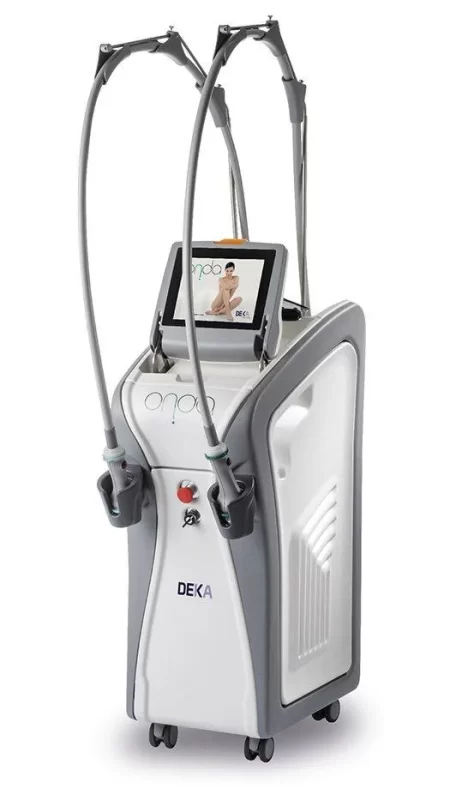
ONDA may be considered as an evaluation option for some localized submental fat and laxity concerns, but it is not suitable for all cases of double chin. Chin retrusion, excess skin, localized fat, and other structural factors can all affect the cervicomental contour; the primary cause should be identified before treatment.
"Having a visible double chin" does not mean "fat reduction is definitely needed here."If there is not much localized fat, continuing to pursue volume reduction may work against the desired contour.
What type of device is ONDA?
ONDA is a device line from DEKA that uses Coolwaves microwave technology. It differs from Thermage's radiofrequency and Ulthera's focused ultrasound in terms of energy form and operation method. They cannot be compared using the same shot count or parameters simply because they are all categorized under contour management.
Manufacturer information includes submental-related applications, but actual suitability still requires verification against the local device version, available handpieces, approved indications, and a physician's assessment. Protocols designed for the body cannot be directly applied to the face.
What factors may contribute to a double chin?
| Primary factors | Key points assessed during consultation | Boundaries of treatment expectations |
|---|---|---|
| Localized submental fat | Thickness, extent, and relationship with surrounding tissues | Local volume management is not the same as full-body weight loss |
| Skin laxity | Skin elasticity and degree of excess | Reducing fat does not necessarily resolve significantly excess skin |
| Chin or mandibular structure | Side profile proportions and cervicomental angle relationship | Energy-based treatments cannot alter bone structure |
| Combined factors | Contribution of each factor to the appearance | Staged treatment may be required; a single device cannot address all concerns |
Why can't selfies and "pinching the skin" determine the treatment plan?
Head tilt angle, camera distance, and lighting can change the appearance of the submental area. Being able to pinch tissue with your fingers also cannot accurately distinguish the contributions of skin, fat, and other structures. Consultation typically also involves observing the front and side views with the head in a natural position, combined with palpation.
If there is a newly developed lump, asymmetric swelling, or pain in the area, a medical evaluation should be done first rather than treating it directly as ordinary fat.
Can ONDA be combined with skin tightening treatments?
If both volume and laxity concerns are present, you can consult your physician about whether combined treatment is necessary. Combination is not always better. The goals, treatment areas, and intervals for each procedure should be clarified to avoid unnecessary repeated stimulation in the same area.
People who naturally have a lean face, noticeable hollowing, or who have had previous contour treatments should be especially clear about how much volume they wish to retain. "The smaller the face, the better" should not be treated as a universal goal.
How should treatment results be observed?
Short-term redness and swelling after treatment can affect visual assessment, so it is recommended to document front and side view changes under similar lighting and with the head in a natural position, and to compare results at follow-up appointments scheduled by your physician. Do not use only before-and-after comparisons with the head tilted down or the feeling of tightness on the same day as evidence of effectiveness.
How many sessions are needed, when results should be assessed, and how much improvement can be achieved all depend on the individual's tissue baseline and the actual treatment plan. No fixed amount of reduction or permanent maintenance can be guaranteed based solely on the device name.
What questions should I ask before and after treatment?
Which ONDA version and handpiece will be used, and whether they are suitable for the area planned for treatment.
The doctor's assessment of whether the main issue is fat, skin laxity, or structural factors, and the relative contribution of each.
Whether previous fillers, thread lifts, implants, or other treatments will affect the treatment plan.
Possible redness, heat sensation, and tenderness, as well as the process for follow-up if persistent pain or skin changes occur.
Post-discharge care instructions, follow-up appointment times, and whether the treatment plan may need adjustment later.
Frequently Asked Questions
Can ONDA help me lose weight all over my body?
Local contouring treatment cannot replace weight management, and a single treatment session cannot be used to infer changes in overall body fat.
I don't have noticeable fat, just loose skin—can I still have this treatment?
You will need to re-clarify your treatment goals and whether the handpiece is appropriate for your case. When there is no need to reduce local fat, a volume-reduction-focused plan should not be used by default.
Which is better for double chin: ONDA or Thermage?
A meaningful comparison can only be made after distinguishing between fat, skin, and structural issues. The two use different energy forms and have different focuses, so they cannot be ranked unconditionally.
Can I see the final jawline result on the day of treatment?
You should not judge the final result by your appearance on the day of treatment. Short-term tissue reactions and long-term changes need to be observed separately.
B: ONDA is listed as a treatment on the AID official website. During your consultation, the appropriate treatment scope and achievable goals should be discussed based on your submental tissue condition and overall facial proportions.