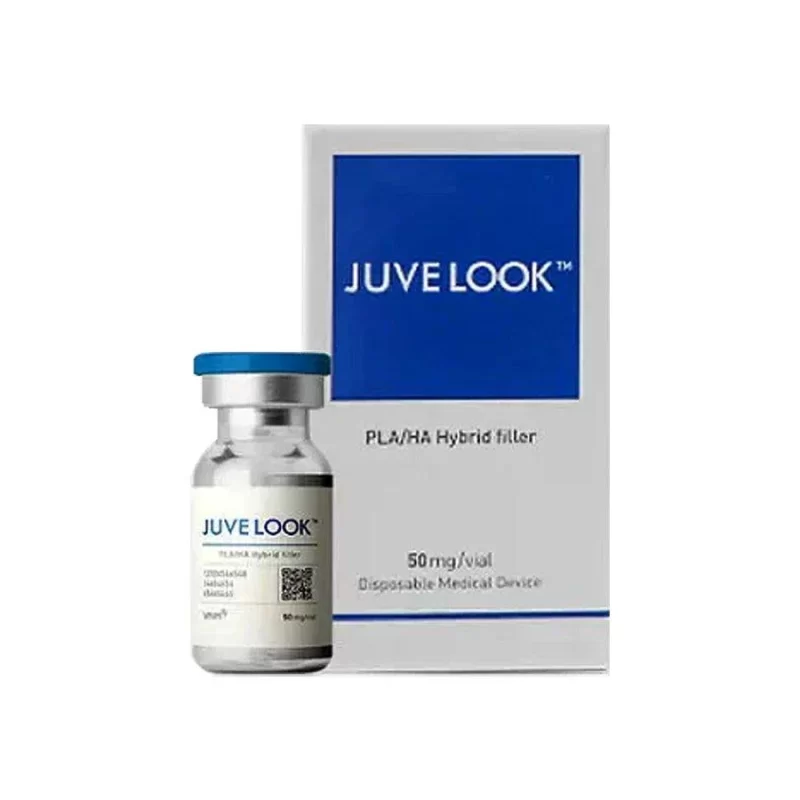
Juvelook Skin is more often discussed for skin texture-related needs, while Juvelook Volume leans more toward volume and contour support needs. The two should not be simply understood as “low dose” and “high dose,” nor should the same volume of reconstituted liquid be considered the same treatment.
First, clarify this:Are you concerned about fine lines, roughness, and uneven texture on the skin’s surface, or volume loss in a specific area of the face? Both types of issues can coexist, but their evaluation goals and treatment methods differ.
What are the similarities and differences between the Juvelook series?
Juvelook-related products feature a combination of PDLLA (poly-DL-lactic acid) and HA (hyaluronic acid). Different specifications vary in material content, particle characteristics, and product positioning; in some markets, Volume-related products are called Lenisna. Always verify against the actual packaging, registration information, and instructions at the treatment location, and do not judge solely by translated names.
| Comparison points | Skin-related plans | Volume-related plans |
|---|---|---|
| Consultation goals | Skin texture, fine lines, and some unevenness issues | Volume, contour, and support issues |
| Key points of in-person consultation | Skin condition, specific type of roughness or depression | Tissue volume, structural relationships, and facial proportions |
| Quote verification | Actual product specifications, material amount, and scope of use | Actual product specifications, target areas, and planned dosage |
| Cannot be inferred from this alone | Do not assume it is suitable for all superficial areas just because the name includes “Skin” | Do not assume all depressions are suitable for injection just because the name includes “Volume” |
Why can’t “pores, acne scars, and depressions” be lumped together?
Prominent pores may be related to oil production, follicle structure, and skin elasticity; acne scars are scar-related structural changes; cheek depressions may involve deeper volume and support issues. Even though they all look “uneven,” the underlying causes are not the same.
For tethered scars, deep acne scars, or obvious sagging, using a single skin nutrition product alone may not address all issues. A doctor needs to first explain the main cause, then discuss whether combined treatments are needed, rather than simply increasing the amount of material.
When quoted by cc, what else should be confirmed?
For products that require reconstitution, liquid volume and material content are not the same concept. The same label of “3cc” may correspond to different reconstitution concentrations, different products, and different scopes of use. Do not assume that a more dilute mixture or more liquid means more active material was used.
The full name, specifications, and expiration date on the packaging.
How much material is used this time, the reconstituted volume, and the actual treatment area.
Which area it is used for, and why this version is selected.
Whether the in-person consultation, anesthesia, consumables, follow-up visits, and taxes are included.
Does the swelling after treatment represent the final result?
The immediate appearance right after injection may reflect both the volume added by the liquid and swelling. The subsequent tissue response takes time, so long-term results cannot be judged solely from photos taken on the same day, and you should not request a touch-up injection on your own just because early changes start to fade.
Document your condition before treatment and observe your recovery and subsequent changes as advised by your doctor. Results are affected by the specific product, treatment area, and individual response, so a specific duration of effect cannot be promised based only on the “Skin” or “Volume” name.
What risks should I be aware of in advance?
In addition to pinpricks, bruising, and swelling, risks such as infection, nodules, persistent hard lumps, and injection-related vascular risks should also be discussed. Unlike pure HA fillers, PDLLA cannot be fully reversed at any time with hyaluronidase.
If a persistent hard lump appears, a doctor should determine the cause; do not massage it yourself or treat it with energy-based devices. If you experience severe unusual pain, changes in skin color, or vision abnormalities after injection, seek medical attention immediately.
Frequently Asked Questions
Can Skin replace Volume for filling depressions?
It cannot be assumed to be a replacement simply by increasing the dose. The material characteristics, treatment area, and treatment goals all need to be re-evaluated.
Is Volume more advanced or more effective?
The model name does not indicate overall superiority or inferiority. A treatment plan is worth choosing only if it better fits your specific needs and tissue conditions.
The area under my eyes looks hollow. Can I just choose Volume?
No. Eye bags, tear troughs, shadows, and puffiness can all contribute to this appearance, and the periorbital area also involves special anatomy and risks, so a dedicated consultation is required.
Can both products be used at the same time?
A doctor must confirm the necessity, placement, and overall plan for each product. You should not assume they can be freely combined just because they are from the same product line.
Juvelook Skin and Juvelook Volume are listed separately on the B:AID official website. During consultation, you can first describe the specific concerns you wish to improve, and then your doctor will verify the appropriate product and suitable treatment direction.