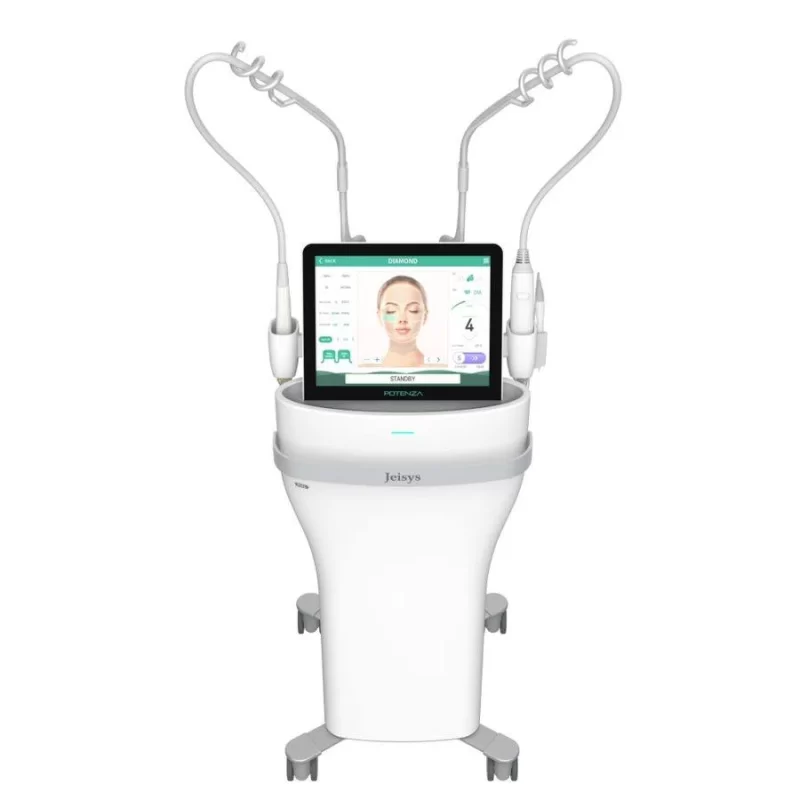
Potenza gold microneedling may be painful; common sensations include needling, heat, and local pressure. Topical anesthesia can reduce discomfort, but a completely painless experience throughout the procedure cannot be guaranteed. The treatment area, needle type, mode, parameters, and individual tolerance all affect the experience and recovery.
Pain is not an indicator of effectiveness.If you feel noticeably abnormal burning pain during treatment, tell your doctor immediately; do not endure discomfort just for a "better effect."
What is the difference between Potenza and regular microneedling?
Potenza is a radiofrequency (RF) microneedling platform, where both needling and RF energy work together in the treatment. Regular microneedling relies mainly on mechanical needling. You cannot apply the same recovery instructions to both just because they both have "microneedling" in their names.
Potenza has different modes and needle configurations. Needles used for localized concerns and configurations for larger-area treatments may correspond to different experiences. When booking, ask about the specific treatment goals, not just that you want "one session of gold microneedling."
What factors affect pain?
| Factor | What to discuss with your doctor |
|---|---|
| Treatment area | Skin and tissue conditions vary by body part, so sensitivity levels may differ. |
| Needles and parameters | The configuration, number of passes, and energy settings should match the treatment goals. |
| Anesthesia preparation | Whether topical anesthesia will be used, any history of allergies, and on-site observation arrangements. |
| Skin condition | If the skin is inflamed, broken, or highly sensitive, the timing of treatment should be evaluated first. |
| Personal history | Whether you have previously fainted from needles, had a strong pain reaction, or had anesthesia-related issues. |
Can I prepare anesthesia on my own in advance?
Do not use anesthetic products over a large area or for a long time on your own, and do not combine multiple anesthetics. The type of anesthesia, application area, and waiting time should be determined by a medical professional. Be sure to inform them of any allergy to local anesthetics and related health information.
If additional pain relief or sedation is needed, its purpose, monitoring, and discharge requirements should be clarified first. Stronger anesthesia does not mean the treatment is necessarily more suitable, and recovery arrangements may also differ.
What reactions are common after treatment?
Redness, swelling, pinprick marks, heat, tenderness, or fine scabbing may occur. Mild reactions sometimes improve within a few days, but when the treated area is larger, the procedure is more intensive, or individual recovery is slower, visible reactions may last longer. You should not interpret "being able to go to work the next day" as being fully recovered.
RF microneedling also carries risks such as infection, pigmentary changes, burns, and scarring; in some use cases, there have been serious reports of fat loss or nerve damage. Whether treatment is suitable and how to control risks must be evaluated by a properly trained physician.
How should I arrange face washing, makeup, and skincare?
Cleansing: Resume cleansing according to your discharge instructions; do not rub the pinprick sites or repeatedly rinse with hot water.
Moisturizing: Use a simple routine approved by your doctor and well tolerated by your skin; do not layer on new products right away.
Makeup: If there is broken skin, oozing, noticeable stinging, or unhealed pinprick sites, do not use concealer to forcibly cover them up.
Sun protection: Reduce sun exposure and use physical barriers; when to resume applying sunscreen to the treated area depends on skin integrity and your doctor's advice.
Irritating ingredients: You should ask your doctor separately when to resume using acids, retinoids, and other active products.
When should I schedule a follow-up visit earlier than planned?
If pain or redness keeps worsening, blisters appear, there is pus discharge, noticeable color changes, fever, or persistent abnormal sensations, contact your doctor promptly for an examination. If a skincare product causes constant burning after application, do not keep using it under the assumption that it is “helping with repair.”
If you plan to travel back to your home country, obtain your treatment records and guidance for handling abnormal symptoms in advance. In case of obvious abnormalities, seek local medical care immediately instead of waiting for a remote customer service representative to assess the situation.
Frequently Asked Questions
Is it normal to still feel sensations after applying numbing cream?
You may still feel a pricking or warm sensation, but any unusually intense or localized burning pain should be reported immediately for your doctor to examine.
Does a deeper treatment depth and higher energy always mean better improvement for acne scars?
This assumption is incorrect. Scar type, location, and tissue condition vary from person to person. Parameters should be matched to the treatment goal, rather than simply pursuing maximum intensity.
Can I apply any nutrient serum directly after a Potenza golden microneedling treatment?
No. The skin’s condition changes after treatment. You need to verify the product’s intended use, sterility requirements, and rationale for combining it with your treatment.
Can I use at-home microneedling to further boost results?
It is not recommended to add extra needling or radiofrequency treatments on your own. Additional damage during the recovery period may increase the risk of infection, pigmentation changes, and scarring.
B: Potenza-related treatments are listed on the AID official website. During your consultation, confirm the needle configuration, single-use consumables, anesthesia, and post-treatment care requirements, and ask your doctor to explain the expected recovery process.