A blurred jawline, double chin, or sagging-looking face is not always just due to “loose skin.” Common causes include decreased skin elasticity, fat accumulation, descent of fat pads, muscle pull, and insufficient bony support.. The logic for choosing Thermage, focused ultrasound, and ONDA varies depending on the underlying cause.
Quick summary
If the main concern is surface skin laxity and reduced elasticity, Thermage radiofrequency can be considered. For deeper tissue tightening and contour support, focused ultrasound options such as Ulthera Prime or Shurink Universe may be worth learning about. When there is thicker fat under the chin or in the jawline area, ONDA’s microwave approach targeting fat and skin tightening may be a better match. Those with thin faces, hollowing, or insufficient volume should carefully consider fat-reduction contouring treatments.
Why does treatment differ even for the same kind of blurred jawline?
Facial contour is shaped together by the skin, subcutaneous fat, fascia, muscles, ligaments, and bone. Some people mainly have thin, loose skin; some have thick fat causing a double chin; and others also have a recessed chin or mid-face volume loss.
Medical assessment cannot be completed by only looking at frontal photos or manually lifting the face upward. An in-person consultation requires evaluating static and dynamic contours, palpating fat thickness, and asking about weight changes and past procedures.
What are the respective target areas of Thermage, focused ultrasound, and ONDA?
| Treatment | Energy type | Most commonly discussed uses | Situations requiring caution |
|---|---|---|---|
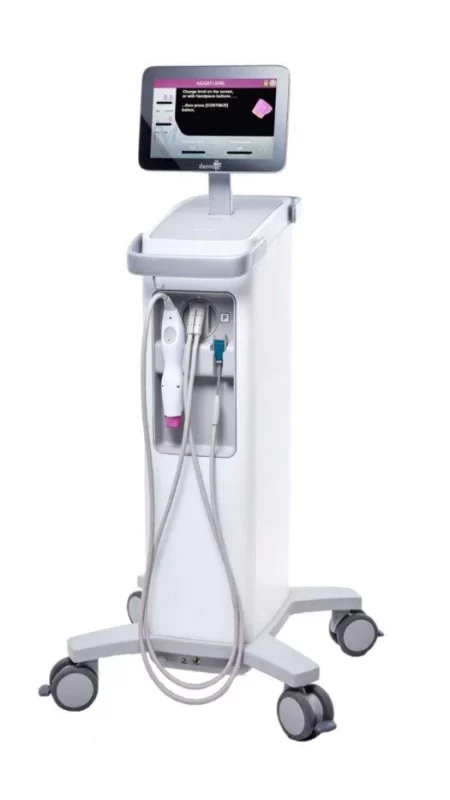
| Thermage FLX | Unipolar radiofrequency | Skin tightening, fine lines, and overall elasticity management. | Thin facial structure, obvious hollowing, or the expectation of significant fat reduction from radiofrequency alone. |
| Ulthera Prime / Shurink Universe | Focused ultrasound | Tissue tightening at different depths, and contour improvement of the jawline and area under the chin. | Very low fat, obvious hollowing, or unsuitability for deep energy coverage. |
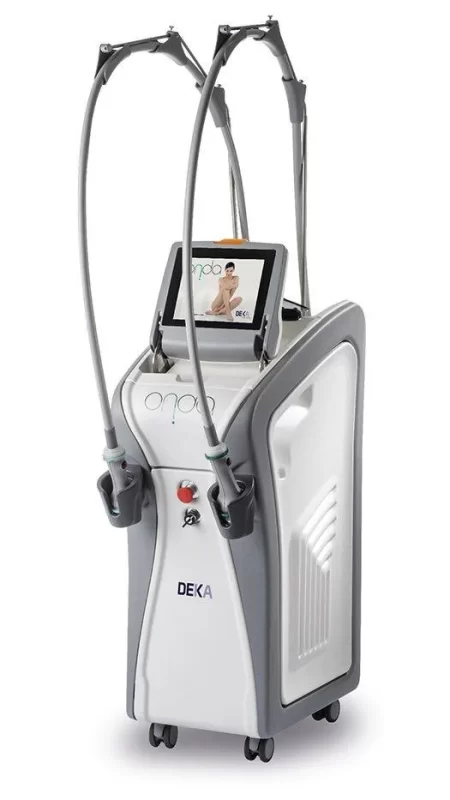
| ONDA | 2.45GHz Coolwaves microwave | Localized fat, the area under the chin, and contour management accompanied by laxity. | Insufficient volume, very thin skin, or when the main concern is not fat-related. |
How to do a preliminary check: is it loose skin or excess fat?
The following can only serve as reference points for consultation and cannot replace a doctor’s in-person assessment:
Little change in weight, but thinner skin, more fine lines, and a gradually sagging contour may point mainly to reduced elasticity;
Thick soft tissue that can be pinched under the chin, which becomes more noticeable with weight gain, may involve a fat component;
Being more noticeable when looking down and less so when looking up does not mean it is only fat — skin and structural factors also play a role;
When cheeks are already hollow, temples are sunken, or cheekbones are prominent, facial volume needs extra protection;
When the chin is short or receding, or there is an abnormal dental-jaw relationship, energy-based treatments may not resolve the core structural issues.
When is Thermage a more suitable option to discuss?
If your main concerns are skin laxity, fine lines, and reduced elasticity, and you do not want a noticeable reduction in facial volume, you can discuss Thermage FLX with a doctor. It uses monopolar radiofrequency to deliver heat and stimulate collagen remodeling.
More shots do not always mean better results. The treatment area, facial size, probes used, and protection for hollowed areas should all be clearly specified in the treatment plan.
When is focused ultrasound a more suitable option to discuss?
If laxity is more noticeable along the jawline, under the chin, or in deeper supporting structures, you can learn about Ulthera Prime or Shurink Universe. Both are focused ultrasound platforms, but they differ in imaging functions, probes, and treatment modes.
Focused ultrasound requires caution for thin faces and hollowed areas. Do not concentrate deep-layer shots on volume-deficient areas just in pursuit of a "stronger lift."
When is ONDA a more suitable option to discuss?
ONDA uses 2.45GHz microwave technology. Official device documentation lists localized fat reduction, skin tightening, and submental (under-chin) contouring as its application areas. For contour issues involving both excess fat and laxity, doctors may include it in their assessment.
ONDA is not a one-size-fits-all solution for all double chins. If the main cause is a receding chin, neck structure, salivary glands, or skin laxity, simply reducing fat may not be sufficient — it could even make a thin face appear more hollow.
Can the three treatments be combined?
Combination approaches can be discussed, but they must have a clear purpose. A common strategy is to address skin tightening, deep structural support, and localized fat separately, though this does not necessarily need to be done on the same day.
Before combining treatments, confirm the following:
What issues each treatment specifically addresses;
Whether they target the same area and similar tissue layers;
Total energy, treatment order, and interval between sessions;
Which hollowed areas or neurovascular regions require protection;
How to distinguish between normal recovery, costs, and adverse reactions;
What the priority would be if only one treatment is chosen.
Who should not blindly undergo fat-reducing contouring treatments?
Those with already noticeable hollows in the temples, under the cheekbones, or in the cheeks;
Those who have recently lost weight rapidly and whose facial volume is still changing;
Those whose jawline concerns are mainly caused by insufficient bony support or a receding chin;
Those who expect a single treatment to resolve all laxity and contour issues at once;
Those with infections, wounds, or unstable inflammation in the treatment area;
Those who have recently had other energy-based treatments, thread lifts, or injectables but have not fully disclosed this to their doctor.
What reactions and risks may occur after treatment?
Radiofrequency, focused ultrasound, and microwave treatments may all cause temporary redness, swelling, tenderness, numbness, or local discomfort. Depending on the device, less common risks may also include burns, blisters, persistent pain, hollows, uneven contouring, or nerve-related symptoms.
If you experience progressively worsening pain, noticeable skin discoloration, blisters, or abnormal movement or sensation, contact the treatment facility promptly and seek medical attention.
How should I describe my concerns during a B:AID consultation?
Don't just say "I want a slimmer face" or "I want a lift." You can point out the angles and areas you care about most, mention whether you are worried about hollowness, if you want to preserve your apple cheeks, whether your weight has changed recently, and what treatments you have had before.
Thermage FLX, Ulthera Prime, Shurink Universe and ONDA are listed on the official B:AID website. Doctors will design a plan based on your facial structure and budget; the specific device, number of shots or energy level should be confirmed before treatment.
Frequently Asked Questions
Is a double chin always caused by excess fat?
Not necessarily. Skin laxity, a recessed chin, neck structure and posture can all affect the appearance, and a consultation is needed to distinguish the cause.
Can people with thin faces still get Thermage?
It can be evaluated, but hollow and low-volume areas should be protected, and a one-size-fits-all shot count and coverage pattern should not be applied.
Can ONDA make the face look hollow?
Any treatment targeting local fat requires an assessment of the underlying volume. In thin faces or when fat thickness is misjudged, the contour result may not meet expectations.
Which gives a stronger lift: Thermage or focused ultrasound (Ultherapy)?
The two use different energy types and target different tissue layers, so they cannot be compared simply by "strength." The choice depends on your skin and deeper tissue concerns.
Will doing all three treatments together give better results?
Not necessarily. More treatments do not equal a more precise plan; they also increase costs, recovery burden and the difficulty of risk assessment.
Should I lose weight first or get the treatment first?
If your weight is changing significantly, your facial volume and skin laxity may continue to change. You can first discuss with a doctor the best time for an assessment once your weight has stabilized.
This article is for general information on facial contouring and related devices, and cannot replace a doctor's assessment of facial anatomy, fat thickness and medical history. The choice of device, treatment areas, number of shots, energy level and combination approach should be determined individually by a doctor.