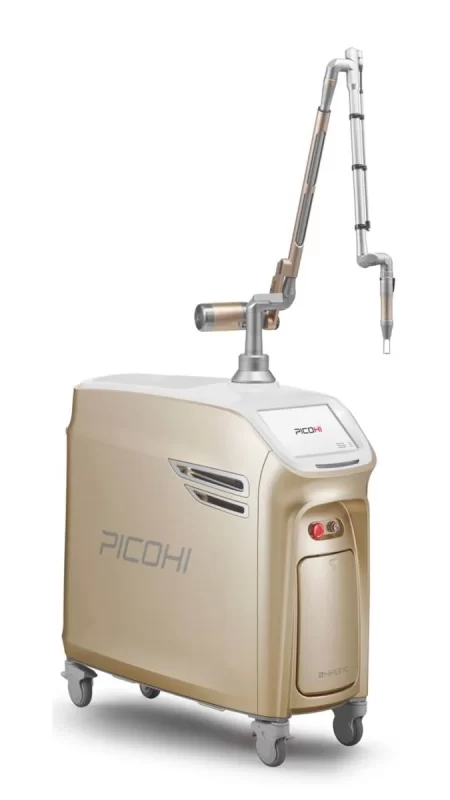
How long you should wait before washing your face or applying makeup after picosecond laser treatment cannot be given as a single fixed number of days based solely on 'having had picosecond laser'. Mild treatments that leave the skin intact require different care than treatments that cause local scabbing, oozing, or broken skin. You should follow the instructions for your specific procedure and the discharge advice given to you.
Check your skin condition first, then count the days.If there is broken skin, oozing, or obvious irritation, it is not appropriate to immediately go back to wearing normal makeup, even if the number of days mentioned online has already passed.
Why do recovery times differ even though it's all called picosecond laser?
'Picosecond' mainly describes the time scale of the laser pulse; it is not a single care package with a fixed intensity. The treatment goal, wavelength, spot size, energy level, whether a fractional setting is used, and the coverage area can all affect how your skin reacts.
So the fact that your friend had no obvious redness or swelling the day after their procedure is not a basis for you to resume face washing or makeup. Before your treatment, you should ask your doctor to explain what changes can be expected with the mode being used for you.
How do you judge when it's safe to wash your face and when it's safe to wear makeup?
| Post-treatment condition | Key points for cleansing and care | Makeup guidance |
|---|---|---|
| Skin intact, only mild redness | Cleanse gently as advised by your doctor; avoid hot water, rubbing, and exfoliation. | Wait until discomfort eases and you are given approval before resuming; do not use foundation as a form of care. |
| Pinpoint scabs appear | Protect the scabs, cleanse as instructed, and do not pick at them or rub hard. | Do not irritate scabs with heavy concealer and repeated makeup removal. |
| Broken skin or oozing present | Individualized wound care is needed; confirm the method with your doctor promptly. | Do not use regular cosmetics on unhealed wounds. |
| Pain and redness gradually worsening | You should have a follow-up check to rule out abnormal reactions. | Address the abnormality first; do not cover up symptoms just to wear makeup. |
'Holding off on face washing' does not mean you can go for long periods without cleansing. If your doctor requires a specific cleansing method, ask clearly what to use, how to use it, and when to adjust the routine, and avoid choosing alcohol or irritating disinfectant products on your own.
Is scab darkening the same as 'post-inflammatory hyperpigmentation'?
Temporarily darker local scabs or pigment after treatment does not necessarily mean post-inflammatory hyperpigmentation. True 'darkening' usually refers to pigment changes that appear or worsen after inflammation, which needs to be judged based on timing, skin appearance, and the original type of pigmentation.
When you notice color changes, you can record them under consistent lighting and contact your doctor for a re-evaluation. Do not try to speed up fading on your own by using high-concentration acids, whitening products, or getting additional laser treatments in a short period. For issues like melasma, follow-up energy-based treatments need to be planned even more carefully.
What is the key point of sun protection after treatment?
Sun protection includes reducing strong sun exposure, avoiding tanning, and using appropriate coverage. When the skin is intact and can tolerate it, you can use broad-spectrum sunscreen products as advised by your doctor; if there are open wounds, you should not apply regular sunscreen directly to the wounds.
You are exposed to the sun during errands, commutes, and outdoor activities too—sun protection shouldn't only be a consideration for beach trips. Sun protection is not a temporary measure that ends the day scabs fall off; it should become part of your ongoing daily routine.
When can you resume using face masks, chemical exfoliants, and retinoids?
It is not recommended to use a large number of new skincare products to "speed up repair." Face masks are not a must after the procedure, as fragrances, adhesive materials, or other ingredients may also irritate the skin. Whether to use a certain type of dressing should be determined based on your specific treatment and your doctor's advice.
Acids, retinoids, exfoliating scrubs, and other irritating products should be reintroduced gradually under guidance after the skin has fully recovered. Even products you previously tolerated may still cause irritation if used right after the treatment.
What instructions should I get before leaving the clinic?
The device, mode, and treated area for this procedure.
Criteria for resuming first cleansing, makeup application, and active skincare.
Whether scabbing is expected, how to care for the skin, and when to return for a follow-up.
Contact information for reaching the clinic if post-inflammatory hyperpigmentation or inflammatory reactions occur.
The evaluation point for your next treatment, rather than just booking appointments based on a fixed package schedule.
Frequently Asked Questions
Is it mandatory to avoid water for seven days after picosecond laser treatment?
There is no one-size-fits-all requirement that applies to all treatment modes. You should get specific cleansing instructions based on your actual procedure and the integrity of your skin.
Does no scabbing mean the treatment didn't work?
That is not a valid way to judge effectiveness. Some treatment plans are not designed to produce noticeable scabs at all; effectiveness should be evaluated against the intended treatment goal.
Can post-inflammatory hyperpigmentation be immediately removed with another picosecond laser session?
You should not add extra sessions on your own. The cause of the pigment change and the state of inflammation must first be assessed before discussing observation, care, or further treatment.
What should I do before treatment if I absolutely have to wear makeup the next day?
Tell your doctor about this constraint in advance. Adjust the treatment type or schedule if needed; do not try to resolve recovery conflicts by forcing on heavy coverage right after the procedure.
When consulting about picosecond laser treatments at B:AID, please also mention any upcoming photography plans, makeup needs, and outdoor itineraries, and keep the personalized care instructions from this visit.