If you’re planning to go to South Korea for skin care or light aesthetic treatments, the most important things to check when choosing a clinic are not “the widest range of services” or “the lowest price.” Instead, you should confirm:whether the clinic is properly set up to serve overseas patients, who will conduct the consultation and perform the procedure, what the treatment plan is based on, what the total cost covers, and who will follow up if issues arise after you return home.
In this article, “Korean dermatology or aesthetic clinics” refers broadly to medical facilities that offer skin aesthetics, laser, energy-based device, or injectable treatments. A clinic’s name, a doctor’s specialty background, and the actual scope of services are not the same thing — you should verify each one separately before booking.
Quick summary
A clinic worth further consulting should at least be willing to clearly explain the doctor’s credentials, the treatment staff, the names of devices or products used, the expected number of shots or dosage, risks and recovery time, the full cost, and post-treatment contact information. If you never get clear answers to these questions, it is not recommended to pay immediately based solely on low prices or social media recommendations.
Step 1: Verify the clinic’s information first, instead of picking a package right away
For people traveling to South Korea from overseas for treatment, the first step is to confirm the clinic’s official name, physical address, and contact details, and ask whether it has the necessary registration or service capabilities to接待 foreign patients.
South Korea’s Medical Korea operates a registration system for medical institutions that serve foreign patients, and provides a search portal for registered facilities. When booking, you can ask customer service to provide the clinic’s official Korean name or relevant registration details, then verify them through official channels. Note that a “registered medical institution” is not the same as the higher-tier “certified medical institution” — the two should not be confused.
Before booking, it is recommended to confirm:
whether the clinic’s official Korean name matches its actual address;
whether the booking, payment, and receipt are all issued by the same institution;
whether Chinese-language support is available, and whether Chinese-speaking staff handle translation, consultation, or medical decisions;
what channel to use to contact the clinic if abnormal reactions occur after returning home.
Step 2: Confirm who conducts the consultation, who creates the plan, and who actually performs the treatment
Online customer service can help organize your needs and book appointments, but whether a treatment is suitable, the treatment area, energy level, number of shots, or dosage should be determined by a qualified doctor based on your medical history and an in-person examination.
During the consultation, you can directly ask:
Which doctor will be conducting the consultation today?
Who will ultimately perform the treatment? Will the consulting doctor be the same as the treating doctor?
Does the doctor have relevant experience with this treatment and with skin types similar to mine?
Aside from the treatments I asked about, are there any more conservative or more suitable options?
Under what conditions would treatment not be advisable today?
Aesthetic treatments also carry risks. A reliable consultation will not only describe potential improvements, but also explain limitations, alternative options, recovery time, and possible side effects. Discussions that focus only on results, without asking about past treatment history, medications, allergies, or recent skin condition, are usually not enough to support an individualized assessment.
Step 3: More devices don’t mean a better fit — the key is whether the treatment plan can be clearly explained
Even for treatments described as “lifting,” “pigmentation removal,” or “pore improvement,” different devices may work differently, target different concerns, and have different recovery times. When choosing a clinic, you can consider whether it has a full range of devices, but you should focus more on whether the doctor can explain “why this option was chosen.”
Before treatment, it is recommended to confirm:
the full name and model of the device or product being used;
the treatment area, expected number of shots, dosage, or number of vials;
whether disposable probes, needles, or other consumables are used;
whether the plan is a single treatment or a combination, and why a combination is needed;
the expected direction of improvement, the general timeline for seeing changes, and factors that help maintain results;
Common reactions, uncommon risks, and abnormal symptoms that require immediate contact with the hospital.
Display of certifications for equipment or products can be one source of information, but certification plaques or brand photos cannot replace a doctor's judgment of indications and risks. Even if the treatment name is the same, treatment parameters should not be determined solely based on online templates.
Step 4: Break down the "quoted price" into verifiable items
Prices for Korean medical aesthetics are often calculated based on the number of shots, dosage, vials, treatment area, or combination packages. When you see a single number, first confirm what it represents rather than immediately comparing the lowest prices across different clinics.
| Items to confirm | What to ask during the consultation |
|---|---|
| Treatment specifications | Is it for the full face or a local area? How many shots, how many cc, or how many vials exactly? |
| Doctor's fees | Does the quote include the doctor's consultation and the procedure performed by the doctor? |
| Tests and anesthesia | Are there separate charges for skin testing, numbing cream application, or other anesthesia costs? |
| Consumables | Are probes, needles, and other disposable consumables included? |
| Taxes | Does the listed price include VAT? Are there any applicable tax refund rules currently? |
| Post-treatment items | Are cold compresses, soothing care, medications, or follow-up visits charged separately? |
| Rescheduling and refunds | What are the rules for the deposit, rescheduling, and cancellation? |
A price range can be provided before the consultation, but the final plan may be adjusted based on the in-person assessment. When comparing quotes, try to compare based on the same treatment, same specifications, and same inclusions.
Step 5: Assess your skin first, then decide whether to proceed with the treatment
Photo and video consultations can help customer service staff get a preliminary understanding of your needs, but lighting, filters, and shooting angles can affect the assessment. Pigmentation, redness, acne marks, pores, and facial sagging may sometimes coexist, and may require different treatment approaches.
When necessary, the doctor will gather more information through in-person observation or skin testing. Test results are supplementary materials and cannot replace taking a medical history and the doctor's judgment. If your skin is currently experiencing an allergic reaction, infection, severe inflammation, or if you have undergone other treatments recently, you should inform the doctor truthfully, and the doctor will decide whether the treatment needs to be postponed.
Step 6: For cross-border medical visits, it is even more important to ask clearly about post-treatment follow-up
The end of treatment does not mean the end of medical communication. Especially for injectable, laser, radiofrequency, ultrasound, or microneedling treatments, you should confirm the follow-up arrangements after returning home before making a reservation.
At minimum, you should know:
What symptoms are considered normal reactions, and roughly how long they last;
Which symptoms require you to contact the hospital promptly or seek medical attention nearby;
Whether you can wash your face, wear makeup, exercise, drink alcohol, use a hot spring, or take a flight after the treatment;
whether issues will be relayed through customer service or you can receive further assessment from a doctor;
whether you can obtain the treatment name, product information, treatment date, and post-treatment instructions.
Recovery time should not be judged solely by whether it "won't affect your trip." Travel itinerary, return flight, sun exposure, and scheduling multiple treatments back-to-back can all affect post-treatment care, so these should all be mentioned during the consultation.
One-minute check: if you encounter these situations, it is recommended to hold off on making a decision
Guarantees specific results before a consultation has taken place;
Only emphasizes discounts and countdowns without explaining treatment risks;
Cannot clarify who will conduct the consultation and who will perform the treatment;
Remains vague about device models, product names, number of shots, or dosage;
Does not ask about medical history, allergies, medications, or recent treatments;
Cannot provide a complete price quote or post-treatment contact information;
Demands full payment immediately before you understand the treatment plan.
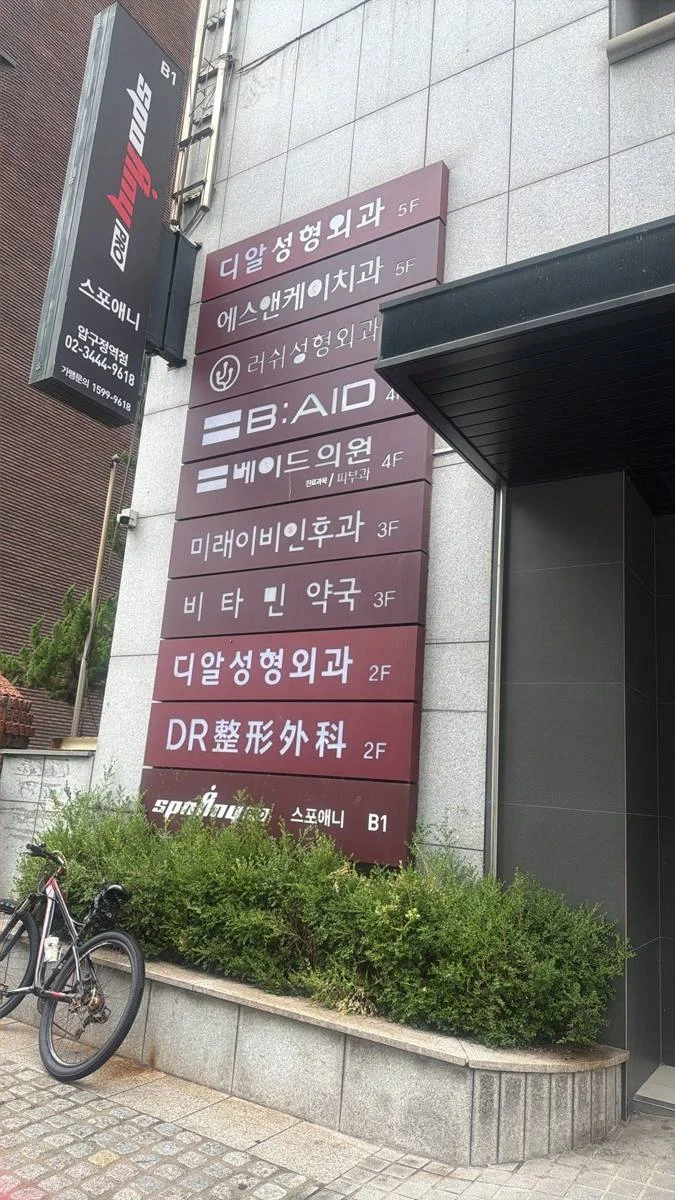
What should I prepare before consulting B:AID?
The B:AID official website already provides information on the medical team, treatment services, price references, and contact and booking details. Before consulting online, it is recommended to prepare the following information:
Front and side photos taken in natural light without filters;
One main concern you most want to improve, and the recovery time you can accept;
Previous aesthetic treatments and their approximate dates;
Medications you are currently taking, known allergies, and important medical history;
Dates of your arrival in Seoul, planned treatment, and return trip.
This information can help staff prepare for your needs in advance, but the final treatment plan will still be determined by an in-clinic doctor consultation.
Frequently Asked Questions
Is a Korean dermatology clinic that is very popular on social media definitely right for me?
Not necessarily. Popularity can help you discover clinics, but it cannot replace a doctor's experience, specific treatment scope, risk explanations, and post-treatment follow-up. Use social media reviews as a starting point, then verify item by item using the checklist in this article.
Is it better for a Korean dermatology clinic to have more devices?
Having a wide range of devices means there may be more options, but what really matters is whether the doctor can explain the reasoning behind their choice based on your skin concerns, medical history, and recovery time. The number of devices alone does not mean a treatment plan is more suitable for you.
How can I confirm which device or product is being used?
Ask for the full brand, model, treatment specifications, and consumable information before treatment; for injectable products, you can confirm the product name, dosage, or number of vials. Verification methods vary by product, so you can ask the clinic to show the official source information they are able to provide.
Is the lowest price the best deal for Korean aesthetic treatments?
Don't just compare a single number shown on a page. You should also compare whether the treatment area, number of shots, dosage, doctor's fee, anesthesia, consumables, taxes, and post-treatment care are the same.
Can I get multiple treatments done on the same day?
Some treatments can be combined, while others need to be scheduled separately. Whether they can be done on the same day depends on the treatment area, skin condition, energy or dosage, previous treatments, and recovery time, and should be determined by the consulting doctor.
When is the right time to make an appointment?
Doctor schedules, treatment durations, and holiday arrangements are all subject to change. You should inquire as early as possible once your itinerary is confirmed, and leave room to adjust or cancel treatments after the consultation. It is not recommended to schedule treatments within a tight, unchangeable travel plan.
This article is for general informational purposes only and does not replace a doctor's consultation, diagnosis, or personalized medical advice. Whether a treatment is suitable, specific parameters, and recovery arrangements should be determined by a doctor based on your individual medical history and on-site condition.